

Nike Air Foamposite One
The Nike Air Foamposite One is a basketball shoe that debuted in 1997. Known for its unique, futuristic design, this sneaker quickly gained cult status. The upper is made of polyurethane foam that perfectly adapts to the shape of the foot, providing not only exceptional comfort but also durability. Distinctive pearl or metallic finishes add a unique look. The Nike Air Foamposite One is also renowned for its excellent cushioning thanks to Zoom Air technology, making it an ideal choice not only for the court but also for the street.

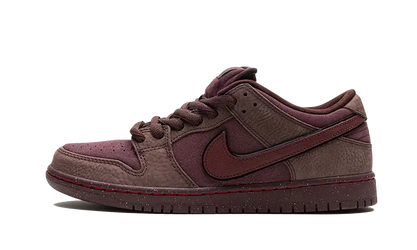
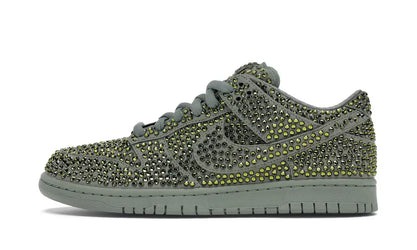

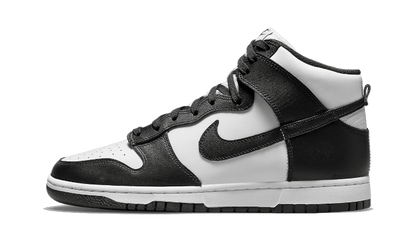


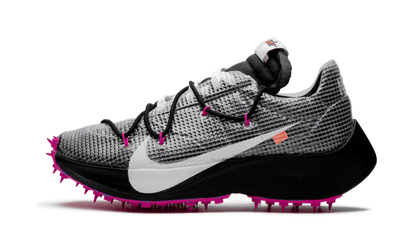
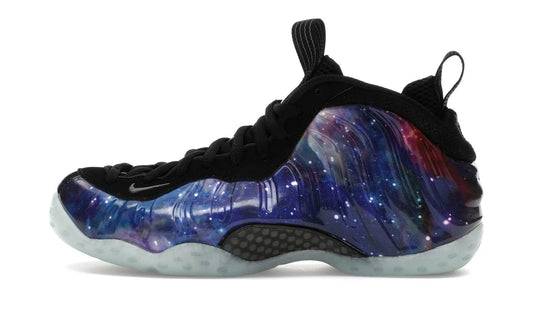
Nike Air Foamposite One Galaxy (2025)
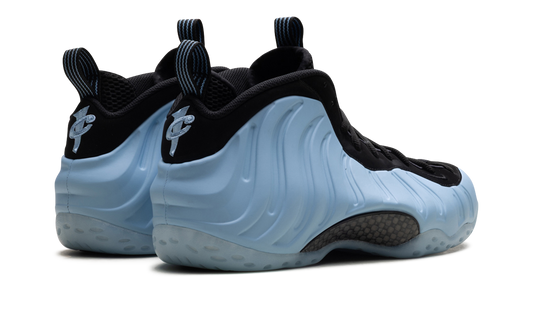

Nike Air Foamposite One Psychic Blue

Nike Air Foamposite Pro Black Voltage Yellow

Nike Air Foamposite One Stranger Things
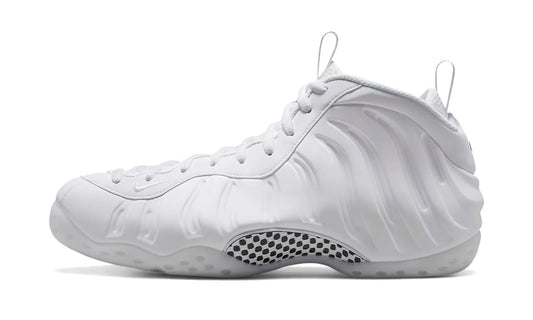
Nike Air Foamposite One Triple White
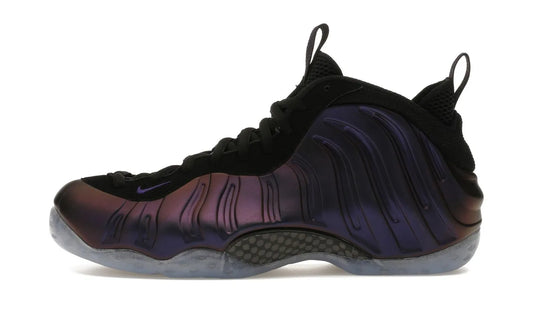
Nike Air Foamposite One Eggplant (2024)
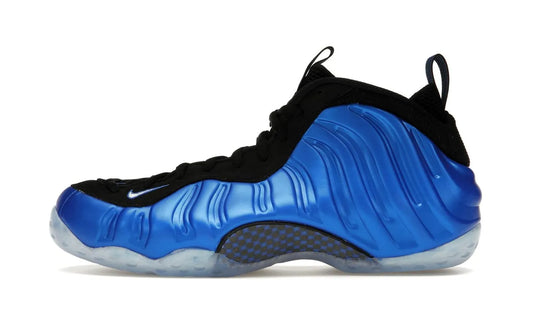
Nike Air Foamposite One International Blue
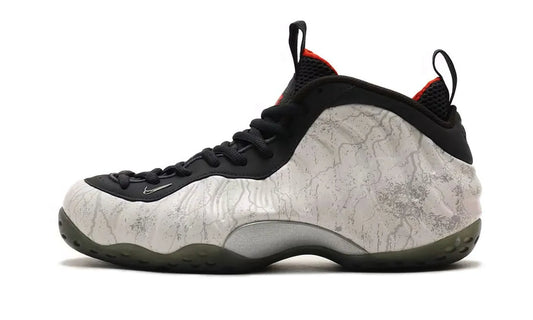
Nike Air Foamposite One Tekken 8 Jin Kazama
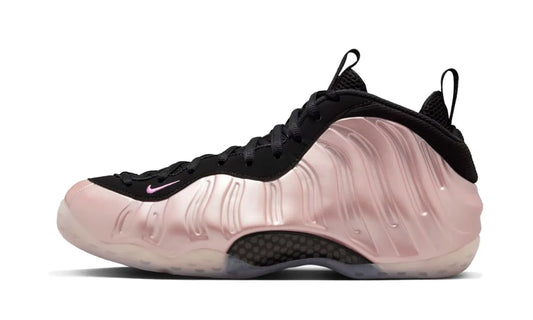
Nike Air Foamposite One DMV Cherry Blossom
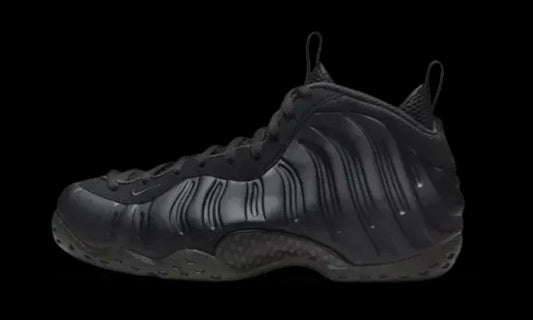
Nike Air Foamposite One Anthracite (2023)
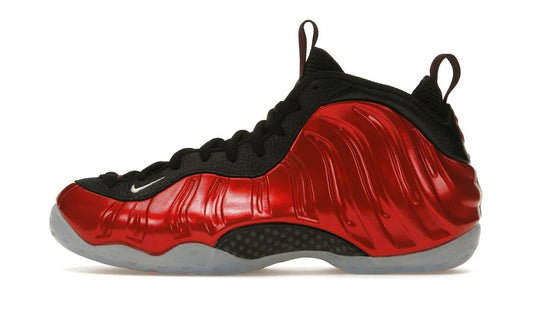
Nike Air Foamposite One Metallic Red (2023)
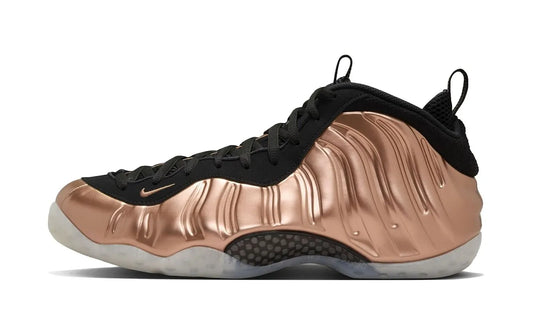
Nike Air Foamposite One Copper (2024)
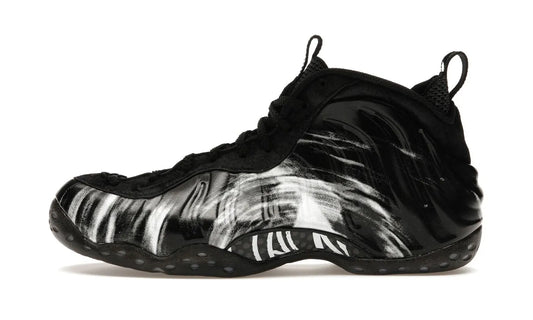
Nike Air Foamposite One Dream A World Black
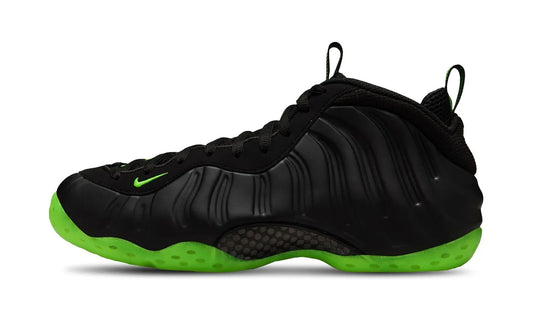
Nike Air Foamposite One Black Volt
The Nike Air Foamposite One is considered one of the most transformative designs in basketball shoe history. Debuting in 1997, its creation stemmed from the vision of legendary Nike designer Eric Avar and the Advanced Product Engineering team. It launched with a bold retail price of $180—a shock at the time—signaling Nike's confidence in something truly different.
What truly sets the Foamposite One apart is its seamless, one-piece polyurethane upper . This fluid-like construction creates a futuristic aesthetic never before seen in basketball shoes. The shell looks almost sculptural—molded rather than stitched. Its iridescent finish shifts and flows with light, embodying innovation both visually and functionally.
There's serious engineering beneath this iconic mountain. A full-length Zoom Air cushioning system delivers responsive comfort throughout the shoe. A carbon midfoot plate serves dual functions: it returns energy during toe-off while simultaneously stabilizing lateral movements. These technologies work in harmony to create both support and responsiveness.
The polyurethane material has a unique characteristic: it doesn't stretch like traditional leather or mesh. Instead, it molds to the individual shape of your foot through heat and pressure, ultimately creating a personalized, glove-like fit that adapts specifically to you.
Penny Hardaway's '1 Cent' logo adorns the heel, forever linking the shoe to the Orlando Magic star. While not formally a signature model, the association has become inextricably linked to the shoe. The shoe has evolved into a lifestyle icon and one of the most coveted silhouettes in sneaker culture, transcending its basketball roots.
It wasn't an instant hit. The radical design and price premium initially put consumers off. However, the Foamposite One proved to be a shoe ahead of its time—a model that ultimately changed industry standards and demonstrated that synthetic materials could achieve both aesthetic excellence and functional superiority.
What is the story behind the Nike Air Foamposite One?
Eric Avar , a visionary Nike designer, originally conceived the Foamposite concept with Scottie Pippen in mind. The legendary Chicago Bulls guard seemed the perfect athlete to debut such a radical shoe. But Pippen rejected it. He considered the futuristic design too unconventional, too far removed from traditional basketball shoe aesthetics.
The shoe needed a champion. Nike needed an athlete willing to take creative risks. The breakthrough moment arrived unexpectedly during a product meeting. Eric Avar was presenting potential Air Penny 3 designs when Penny Hardaway spotted something in his bag. It was a Foamposite prototype. Hardaway's reaction was immediate and decisive: "What is this? This will be my next shoe!"
While the Foamposite One isn't technically Penny's signature model, this chance encounter forged an inextricable connection. The shoe would forever carry Hardaway's cultural imprint and his iconic ' 1 Cent ' logo on the heel.
The on-court debut came before the NBA's spotlight. University of Arizona player Mike Bibby was the first to wear the Foamposite One. A few weeks later, Penny Hardaway debuted it at Orlando Magic games, introducing the shoe to the most shallowly lit stage in professional basketball.
Success wasn't immediate. The radical design, combined with the shocking $180 price tag, created significant market resistance. Consumers remained skeptical. The shoe was truly ahead of its time—a visionary creation that sneaker culture wasn't yet ready for.
Appreciation has been building over the years. The Foamposite One's cultural evolution represents Nike's willingness to embrace pure experimentation and challenge industry conventions, even when the market initially rejected the innovation.
Revolutionary production and technology
The Nike Air Foamposite One represents a groundbreaking leap in sneaker manufacturing—a process so unconventional that it required Nike to fundamentally reevaluate the way it builds shoes. The innovation began with an unexpected impulse: a sunglasses frame placed on a table during a product development discussion. Its lightweight, seamless EVA foam structure inspired a radical question: What if the entire upper of a shoe could be made the same way?
This vision led to the development of an entirely new manufacturing process. The Foamposite upper is created by heating liquid polyurethane to temperatures between 130 and 175 degrees Fahrenheit and then pouring it into specially designed molds. This technique creates a seamless, one-piece upper—a breakthrough in 1997, when nearly all basketball shoes relied on stitched leather, suede, or fabric construction.
The financial commitment was enormous. The molds required to produce the Foamposite shell cost $750,000 each—about $1.4 million in today's currency. This represented a significant financial risk, which initially met resistance within Nike. To produce these precision molds, Nike partnered with Daewoo, a South Korean automaker with expertise in molding technology. This unconventional partnership underscored just how specialized the manufacturing challenge had become.
Beyond the iconic upper, the shoe featured a number of innovative components. A lightweight Phylon midsole provided primary support, while a full-length Zoom Air unit provided responsive cushioning along the entire length of the foot. Carbon fiber in the midfoot served dual functions: acting as a spring plate for energy return during push-off, while simultaneously acting as a torsion system for stability, extending along the lateral and medial sides of the foot. This dual engineering approach proved crucial to the shoe's performance capabilities.
Nike also developed specialized gluing and stitching techniques that were five times more durable than conventional methods. The entire development process took three years of pure experimentation. There was no predetermined design brief—just the fundamental question of how to completely transcend manufacturing norms.
The result was a shoe that looked completely different from anything that had come before. Foamposite's seamless construction eliminated the weaknesses inherent in traditionally sewn designs, while the meticulous work of the Advanced Product Engineering team transformed experimental concepts into wearable reality. This revolutionary technology not only transformed sneaker manufacturing; it proved that molded synthetic materials could achieve both aesthetic excellence and functional superiority.
Fit, size and adaptation period
The Nike Air Foamposite One poses unique sizing challenges that differ from standard basketball shoes. These sneakers offer a true-to-size fit , but this simple answer hides important nuances worth understanding before purchasing.
From the moment you unbox, expect a challenging experience. The stiff polyurethane shell creates a distinctive feeling of stiffness and compression. This isn't a design flaw—it's intentional. The integrated Dynamic-Fit inner sock hugs the foot like a compression sock, providing immediate support but at the expense of initial comfort.
Polyurethane behaves differently than leather or mesh. It doesn't stretch. Instead, it transforms through heat and pressure molding , gradually adapting to the unique contours of your foot. This adaptive process is key to the Foamposite One experience.
Be prepared for a period of adaptation that lasts several wears—usually two to three extended wear sessions. During this period, the shell gradually softens. The stiff material flexes where your foot naturally bends. Gradually, this stiffness transforms into personalized support. The result is glove-like comfort that feels designed specifically for your foot shape.
For average to slightly narrower feet, staying true to size works well. The adaptive fit technology rewards patience. However, those with truly wide feet should consider sizing up half a size . This ensures immediate wear without requiring a lengthy adjustment period. The forefoot fit can be particularly tight in some colorways, making this consideration especially important for those with wider feet.
The initial compression brings unexpected benefits. After a period of adaptation, this supportive structure provides exceptional ankle support and stability during dynamic movements. The carbon plate and polyurethane coating work synergistically, creating a solid foundation for lateral movements and quick changes of direction. The compression transforms from discomfort to a performance advantage.
Patience during the adaptation process will unlock the shoe's full potential. The Foamposite One rewards those who take the time to transition.
Iconic color variants and design variations
The Nike Air Foamposite One has emerged in sneaker culture in numerous, visually striking colorways since its debut in 1997, each telling its own story within the broader Foamposite narrative. The original Dark Neon Royal colorway first introduced the world to the shoe's fluid, iridescent finish —a groundbreaking visual element that reflected and refracted light in ways that leather and textile couldn't. This staple version was reissued multiple times in 2007, 2008, and 2011, proving its enduring popularity among collectors and enthusiasts.
The Eggplant colorway is considered one of the most sought-after releases in Foamposite history. Featuring a striking combination of black and varsity purple , the Eggplant delivers a color-shifting effect that commands attention from every angle. The iridescent finish on this model is particularly mesmerizing, creating a cosmic depth that justifies its legendary status among collectors. Originally released in 2009, demand was so high that Nike reissued it in both 2017 and 2024, with each release generating immediate sell-outs.
Metallic releases have become a signature expression of Foamposite's reflective capabilities. The Metallic Copper features a gleaming copper polyurethane upper with black accents and a translucent rubber sole, delivering a bold metallic aesthetic that photographs exceptionally well. The Metallic Gold similarly showcases the material's ability to capture light and create depth through a robust application of color. These metallic finishes demonstrate that Foamposite's appeal extends beyond multicolored compositions.
The Galaxy colorway has achieved legendary status in the sneaker community. Its cosmic purple and black design perfectly embodies the shoe's futuristic essence, bridging the gap between athletic footwear and wearable art. This release resonated deeply with collectors seeking designs that reflected the shoe's innovative nature.
Additional notable variants include Electrolime , Cactus , University Blue , Maroon , Pewter , and Olive , each offering distinct aesthetic approaches. Recent releases have introduced the Carbon Fiber colorway—a discreet black look with an allover carbon fiber pattern paired with an icy translucent sole . This technical aesthetic directly references the shoe's innovative structural solutions.
Every authentic Foamposite One features Hardaway's iconic 1 Cent Penny logo on the heel, typically color-coordinated with accents throughout the design. This branding element remains a hallmark of authenticity and cultural significance.
It's important to distinguish the standard Foamposite One from the Foamposite Pro , a distinct variant featuring a visible gel Swoosh on the side panel. The original Foamposite One keeps external branding minimal, allowing the seamless upper to command visual attention without being distracting.
Retro reissues of classic colorways have made previously limited editions more accessible to new generations of fans. However, limited editions from earlier years—particularly the original 2009 releases and exclusive collaborations with fashion brands like Comme des Garçons—retain significant collector value and remain highly sought after among serious sneaker enthusiasts.
Key features that make playing easier on the pitch
The Nike Air Foamposite One transcends its lifestyle appeal by serving as a legendary basketball shoe equipped with cutting-edge technology. Its seamless construction eliminates the weaknesses inherent in traditional seam-sealed designs, creating a locked-down fit that moves with the foot during explosive movements.
A full-length Zoom Air cushioning unit extends the length of the shoe, providing responsive impact protection while maintaining excellent court feel. This technology delivers consistent energy return with every step—critical for the demanding, stop-and-go nature of basketball. The cushioning works in harmony with the shoe's structural elements, balancing responsiveness and stability.
At the heart of the shoe is a carbon midfoot support plate —an innovative, dual-function solution that sets this shoe apart. It acts as a spring plate , returning energy during toe-off for explosive moves. It also functions as a torsion system , providing midfoot stability while allowing the foot to naturally flex. This plate extends along the lateral and medial sides, visible through transparent areas in a variety of color options.
The rubber outsole features a herringbone tread pattern designed for exceptional grip on the court . This grip pattern is essential for basketball performance, enabling quick directional changes and lateral cuts on hardwood floors without slipping.
Supportive elements enhance overall basketball performance . Nubuck shanks with an embroidered Nike Swoosh icon provide structural consistency. A padded, mesh tongue and ankle collar offer comfort for extended wear, while a heel tab makes the shoe easy to get on and off quickly. A snug, internal Dynamic-Fit bootie creates a sock-like fit that accommodates foot movement without compromising support.
Despite weighing in at around 17.8 ounces, the Foamposite One has proven to be a practical option for serious basketball players. The one-piece polyurethane upper provides exceptional durability and lateral support , rewarding those who prioritize solid construction over lightweight flexibility. This engineering philosophy has established the shoe as a performance option for athletes who value stability and durability over minimal weight.
The Cultural Influence and Legacy of Sneakers
The Nike Air Foamposite One occupies a unique position in sneaker culture—a shoe that transformed from a commercial failure into one of the most influential designs in basketball history. When it debuted in 1997 at a price of $180, the market was skeptical. Consumers considered the synthetic construction unconventional. The price seemed astronomical. Few understood what was happening: pure innovation arrived before the culture was ready to embrace it.
This initial commercial failure shaped the shoe's eventual myth. Retailers struggled to sell inventory. Consumers preferred traditional leather and mesh. However, Nike's commitment to its vision never wavered, and a key cultural force emerged: Penny Hardaway . The Orlando Magic star, who immediately embraced the Foamposite One, created a momentum that cash alone couldn't buy.
Lil Penny's campaign , directed by legendary filmmaker Spike Lee , became a cultural landmark. These ads didn't just promote the shoe—they positioned the Foamposite One as a style statement. The campaign made the shoe desirable. It transformed skepticism into curiosity. Sneaker culture began to take notice.
Regional audiences embraced this shift dramatically. Washington, D.C. , and New York City became epicenters of Foamposite veneration. These markets developed authentic fan communities , where the shoe transcended basketball performance to become a lifestyle sneaker tied to local identity and style. The shoe resonated differently in these regions—not just as game equipment, but as a cultural artifact.
Fashion collaborations significantly enhanced the shoe's credibility. Partnerships with brands like Comme des Garçons introduced the Foamposite One to the haute couture audience. These collaborations proved that sneakers could function as legitimate fashion statements , worthy of designer attention and premium positioning. The Foamposite completely transcended its athletic origins.
Limited editions and exclusive colorways sparked intense collector demand . Each new drop became an event. The scarcity model created urgency and desire. Collectors pursued rare colorways with the same fervor usually reserved for art. The secondary market flourished as the shoe's cultural value accelerated beyond retail prices.
The Foamposite One's design influence resonated throughout the sneaker industry. Its seamless construction and futuristic aesthetic inspired countless subsequent models from Nike Basketball and its competitors. The shoe demonstrated that industry innovation could come from challenging fundamental manufacturing assumptions. Designers worldwide recognized that synthetic, molded materials could achieve both aesthetic excellence and functional superiority.
Nike's willingness to take creative risks with Foamposite set the template for future innovation. The shoe demonstrated that pure experimentation —the philosophy underlying its three-year development—could yield revolutionary results that would reshape industry standards. This philosophy influenced how Nike approached subsequent designs.
Today, the Foamposite One's place in basketball history is firmly established. It earned inclusion in Nike Basketball's prestigious Twenty Designs That Changed the Game series, officially recognizing its transformative impact. The shoe remains a cornerstone of Nike Basketball history , representing a pivotal moment when the brand prioritized innovation over commercial prudence.
Recent retro releases have increased accessibility to new audiences, but vintage pairs and early editions retain significant collectible value. The shoe evolved from an obscure oddity into an icon that bridges sport, fashion, and design culture —a sneaker legacy that continues to influence how we perceive footwear innovation.
Filters and sorting
- Featured
- Most relevant
- Best selling
- Alphabetically, A-Z
- Alphabetically, Z-A
- Price, low to high
- Price, high to low
- Date, old to new
- Date, new to old