

Air Jordan 12
The Air Jordan 12 is a sneaker model designed by Tinker Hatfield and released by Nike in 1996 under the Jordan brand. It is one of the most iconic models in basketball history, characterized by a unique design inspired by the Japanese Rising Sun flag and the traditional garb of a samurai warrior. The sneakers are characterized by high durability, a leather upper, and distinctive stitching resembling sun rays. The Jordan 12 gained popularity thanks to the success of Michael Jordan, who wore them during the 1996-97 season, including memorable playoff games.

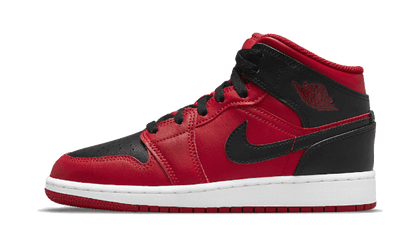
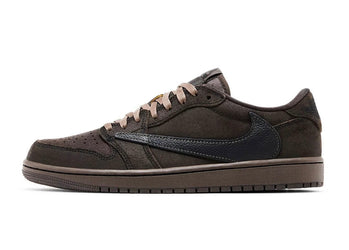
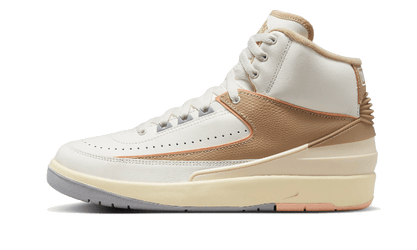


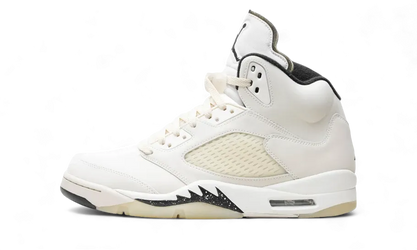


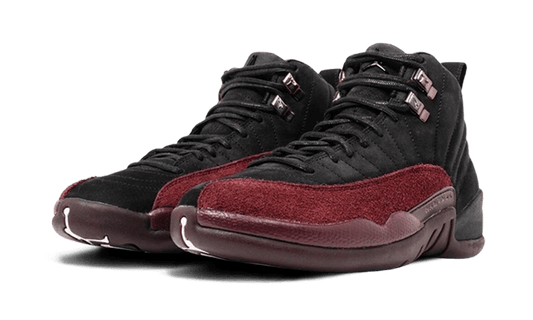
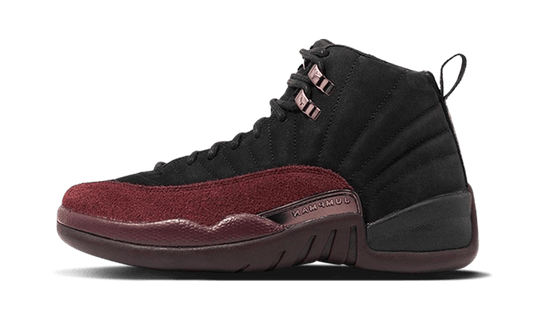
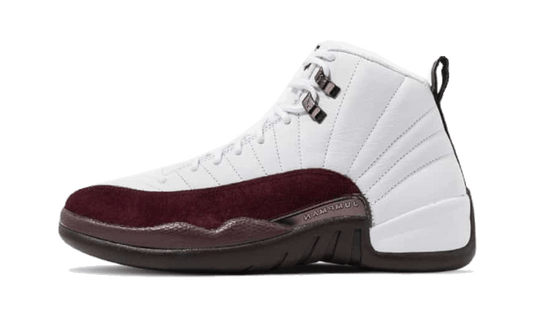
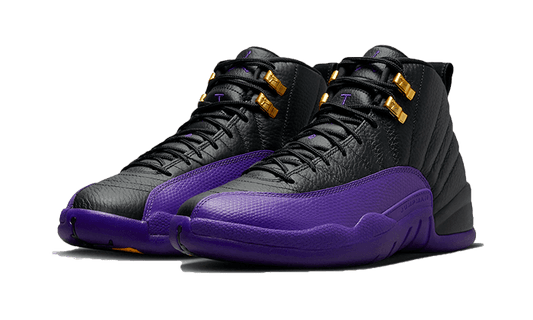
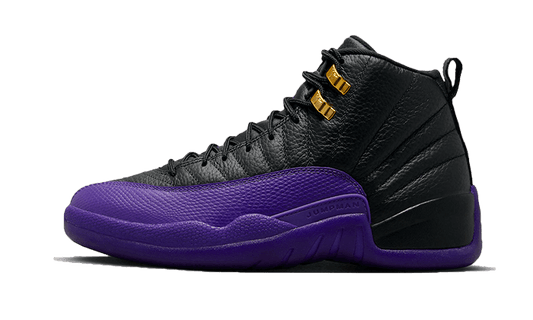
Air Jordan 12 Field Purple


Air Jordan 12 Retro Barons

Air Jordan 12 Retro Bloodline
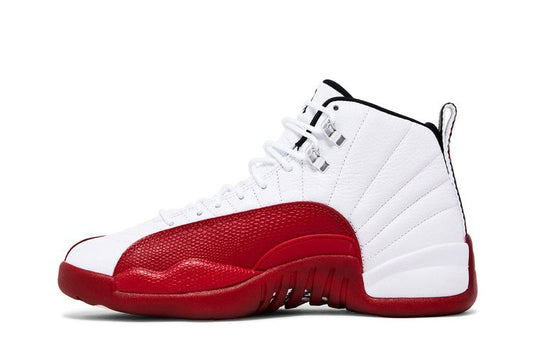
Air Jordan 12 Retro Cherry (2023)
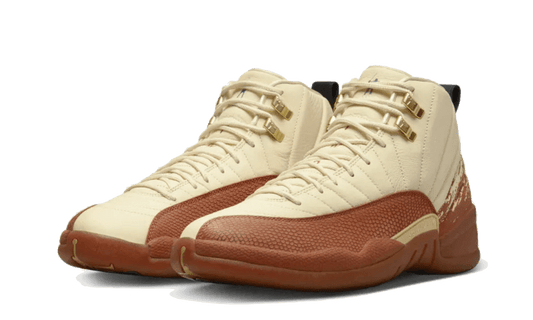
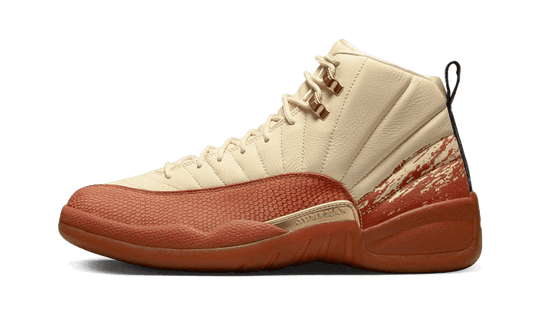
Air Jordan 12 Retro Eastside Golf

Air Jordan 12 Retro Fireside
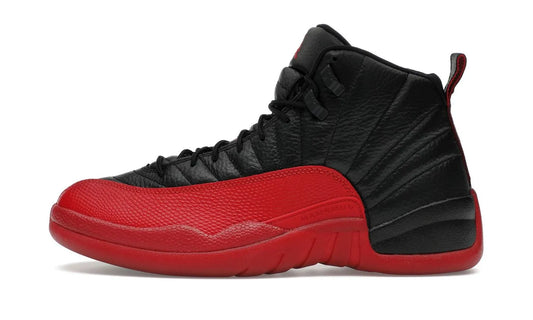
Air Jordan 12 Retro Flu Game (2025)
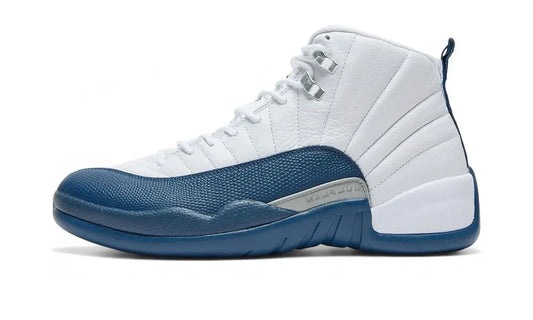
Air Jordan 12 Retro French Blue (2025)

Air Jordan 12 Retro Melo (2025)
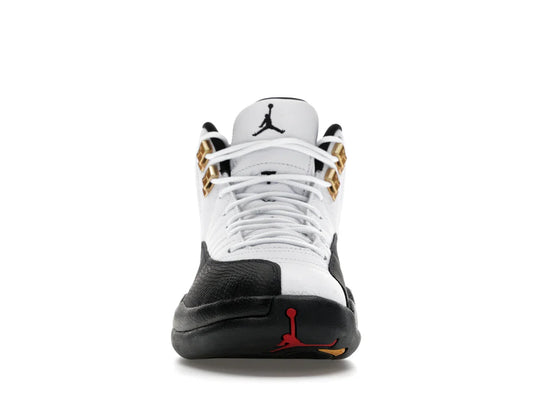

Air Jordan 12 Retro Taxi (2025)
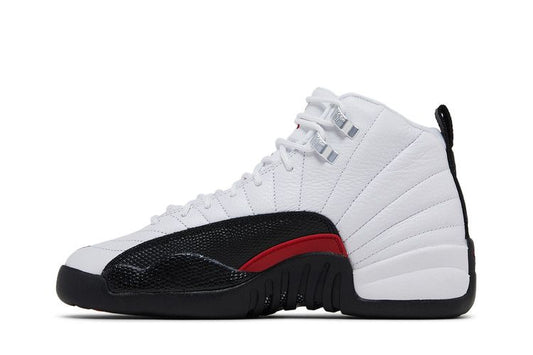
Air Jordan 12 Retro Taxi Flip
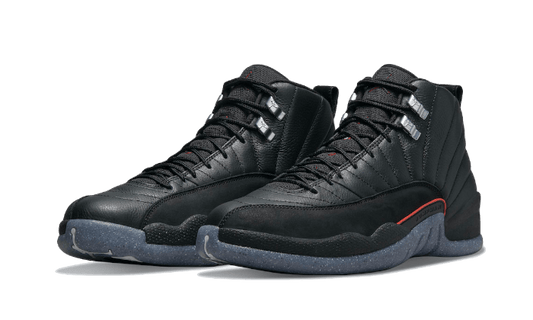
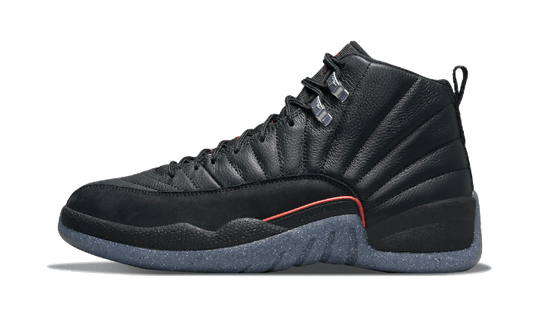
Air Jordan 12 Retro Utility
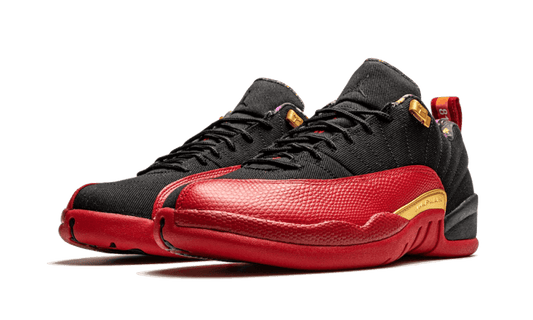
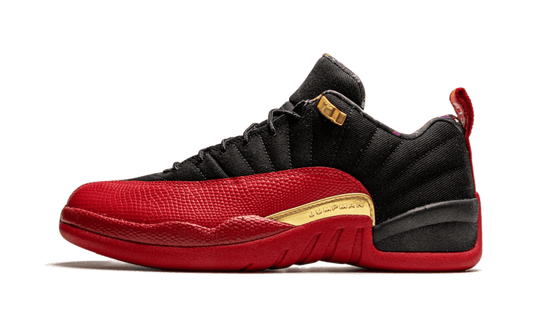
Air Jordan 12 SE Super Bowl LV
The Air Jordan 12 is Michael Jordan's twelfth signature sneaker and a high-top basketball shoe that debuted in November 1996 during the 1996–97 NBA season. It marked a breakthrough moment for Jordan Brand as the first Jordan Brand shoe and the first in the line to not feature the Swoosh —not even on the insoles—signaling a new, independent identity within the Nike ecosystem.
Designed for on-court performance, the AJ12 introduced full-length Zoom Air cushioning to the Air Jordan line for the first time. This design works with a Phylon midsole and carbon fiber sockliner to deliver a responsive, supportive ride that felt advanced at the time and remains revered today.
Its luxurious look is built on premium materials: a full-grain or embossed leather upper, a lizard-embossed mudguard, and metal accents like gold-tone or anodized TPU eyelets. Radiating stitching lines—inspired by the Japanese Rising Sun flag—run across the upper, while refined elements from 19th-century women's heeled shoes and derby shoe designs add a touch of elegance to the silhouette. Recognizable branding includes a "Two 3" detail running along the tongue.
Off the court, the Air Jordan 12 is a silhouette steeped in history and an essential everyday shoe, regularly returning in Jordan Brand retro programs (often branded as Air Jordan 12 Retro or Jordan Retro 12) with original-inspired colorways and lifestyle iterations that blend classic basketball performance with contemporary streetwear culture.
The history of the model: From the "Flu Game" to the birth of the brand
Credited to Tinker Hatfield, the Air Jordan 12 quickly became Michael Jordan's 1997 championship shoe , the pair he wore as he won his fifth NBA title with the Chicago Bulls—a key point in the history of the Air Jordan 12 and its broader origins.
During this series, Jordan rotated between the original colorways—Taxi 12, Cherry/Chicago 12, Playoff 12—and a black-and-red pair that would later be called the Flu Game 12s .
Then came a pivotal moment: Game 5 of the 1997 Finals against the Utah Jazz. Jordan scored 38 points, forced to cope with flu-like symptoms, possibly food poisoning, hit the winning shot, and collapsed into Scottie Pippen's embrace. This single, iconic moment cemented the model's championship legacy and legend of top-tier performance.
A noteworthy note from that era: retail pairs still arrived in Nike boxes—a strange moment in the Jordan Brand genealogy.
The story has been just as active since then. Since the early 2000s—beginning with the first retro in 2003—the AJ12 has returned in multiple cycles, combining original and new versions in sizes for men, women, and kids. The retro opened at $170 in 2013, underscoring its status as an enduring heritage icon in the brand's archives.
Japanese design, materials and iconic colors
The AJ12's paneling is central to its appearance: a stitched upper with radiating stitching creates a sunburst pattern that frames bold color blocks, while the rising mudguard brim with an embossed scallop pattern rises sharply, sharpening the silhouette. The shoe's refined toe box and pronounced heel tab add structure and visual balance, enhancing the premium look that draws from Japanese design language. The leather treatment is less permeable—a familiar compromise that maintains shape and durability while enhancing the premium, formal feel.
High-contrast color blocking is a signature move. A light base and dark accents—seen in original colorways like the White/Black Taxi (first release), White/Varsity Red/Black (often called Cherry/Chicago), Obsidian/White/French Blue, Black/White/Varsity Red (Playoff), and the black-and-red pair later known as the Flu Game—make the sculpted panels pop off the foot and in photos. This approach remains consistent throughout the 12 retro releases, keeping the silhouette instantly recognizable.
Jordan Brand has consistently expanded its palette with lifestyle colorways and special editions. Retro French Blue has returned, while newer iterations like University Gold, Dark Grey, Game Royal, Royalty Taxi, and Field Purple employ the same high-contrast color scheme in fresh tones, encompassing GS and WMNS variations tailored to different audiences. Luxury-focused collaborations emphasize material storytelling: PSNY (Public School New York) editions utilize premium nubuck for a minimalist, high-fashion effect, while OVO (Drake) collaborations—OVO white and OVO black—introduce a clean, monochromatic twist that highlights the AJ12's clean lines.
Court Performance: Zoom Air Cushioning
Based on performance testing and match sessions, the Air Jordan 12 demonstrates impressive all-around performance for a heritage basketball shoe. Cushioning, support, and durability are key strengths that allow the shoe to compete with many modern options.
Cushioning: Full-length Zoom Air units combined with a soft Phylon midsole provide a plush yet responsive platform. Impact protection is a key benefit, particularly appealing to heavier or more explosive players who value impact absorption without sacrificing court feel.
Traction: A modified herringbone outsole with flex grooves combines grip and smooth transitions. Best on-court performance is achieved on clean indoor floors; rough outdoor surfaces reduce effectiveness, and traction on indoor courts is where this shoe excels.
Fit and Stabilization: The AJ12 offers a standard fit for most individuals. Support is strong thanks to a rigid upper, internal heel counter, and lace loops that ride high for added security. A muted tongue and a muted collar enhance ankle lockdown and overall stability.
Support and Stability: The sturdy platform is enhanced by torsional support from a carbon fiber midsole, helping to keep the foot in control during directional changes and difficult postures. FootDoctorZach's review highlights how this stable base and full-length Zoom system can work well with orthotics for additional customization.
Transition Comfort and Wear: Some players may notice a short period of adjustment before the upper loosens up. This is a relatively heavy boot by today's standards, but that weight comes with a solid structure and stability that holds up well over time.
Shoe Anatomy: Technology and Internal Construction
Analyzing the Air Jordan 12 through the lens of shoe anatomy, or teardown, the technology focuses on a layered cushioning system: a full-length Zoom Air unit combined with Phylon foam in the midsole, providing consistent and responsive support. Under the midfoot is a carbon torsion plate—also known as a torsion insert or carbon spring plate—that provides torsional resistance and significant arch support, a plate concept carried over from the Air Jordan 11. This sole design aims to keep the platform unified and stable without sacrificing the comfort provided by the Zoom Air cushioning.
The rubber outsole features a modified herringbone pattern with pronounced traction elements and deformation channels, designed to balance grip with smoother heel-to-toe transitions on indoor courts. Together with the midfoot support provided by the carbon element, the outsole geometry helps the shoe maintain a straight line under load while allowing natural flexibility where needed.
The uppers of most models are constructed from full-grain leather or suede, while an embossed lizard-print mudguard wraps the lower half of the shoe, providing structural support in high-wear areas. Functional details complete the look, including a heel pull tab for easy on and off, and premium design details that highlight the AJ12's quality materials.
Teardown and anatomy-focused reviews often highlight how the combination of materials and chassis influences orthotics, insole customization, and long-term wear decisions. In practice, understanding where the cushioning system meets the metatarsal support helps owners plan orthotic fit and a user guide that respects the shoe's inherent support and stability characteristics.
Variants and product line
The Air Jordan 12 line spans multiple variants and eras. You'll find the standard Air Jordan 12 High, regular Air Jordan 12 Retro drops (including the Retro High), and the Air Jordan 12 Low—introduced as a low-top model during a 2004 retro release. In the case of retro AJ12 releases, the differences between the OG and the retro typically involve materials, color blocking, or minor design tweaks, while still maintaining the original silhouette.
The retail assortment includes men's sizes along with women's WMNS, GS Grade School, PS Preschool, and TD Toddler options. Children's versions often feature shape or color blocking for proportion and comfort, ensuring a cleaner look for the whole family.
Special editions emphasize lifestyle positioning. The PSNY 12 (Public School New York) arrives in a molded nubuck upper with geo-coded palettes—Wheat (New York), Bordeaux (Paris), and Olive (Milan)—for a luxurious feel. OVO 12 editions in OVO white and OVO black represent celebrity collaborations and often command a resale value of $400–800. The International Pack pays homage to heritage with traditional Japanese patterns and a fish-scale pattern on the mudguard, delivering a distinctive collaboration edition.
Despite the variety, the core ride characteristics remain consistent across all variants: full-length Zoom Air across all versions, a carbon reinforcement element, and modified herringbone traction permeate special editions and limited releases.
Style Icon: Influence on Streetwear and the Secondhand Market
The Air Jordan 12's cultural impact extends far beyond the court. With its luxurious aesthetic, inspired by high fashion, the model emerged as one of the first basketball sneakers to blur the line between sport and runway, accelerating the trends that define sneaker culture today. This universal appeal cemented the model as a streetwear icon and a stylish must-have—equally at home in urban streetwear and contemporary fashion, and easily styled for both casual and edgy looks. Its strong, recognizable silhouette resonated with sneakerheads, cementing the AJ12's status within the premium sneaker market and broader popular culture.
The shoe's championship heritage gives it extraordinary narrative weight. The "Flu Game" story transformed the shoe into a symbol of determination and resilience—an idea that quickly spread through hip-hop and music video culture, where celebrity endorsements amplified its impact. Artists and public figures embraced the AJ12, and figures like Fabolous helped promote it in both broadcast media and streetwear, making its high-contrast colorways instantly memorable on screen and in the streets.
Drake's role in the OVO (October's Very Own) collaboration garnered renewed attention, introducing the silhouette to a new generation and highlighting how a celebrity partnership can reimagine heritage products for modern audiences. These moments reinforced the fusion of basketball heritage and high-fashion footwear, keeping the AJ12 at the center of urban streetwear conversations.
Its cultural significance also manifests itself in resale culture and sneaker collecting. Secondary market prices for general releases typically hover around $180–$280, while OG variants tend to reach $220–$400. Limited editions can reach $400–$1,000+, and original "Flu Game" pairs have sold at auction for over $100,000—clear signals of a collectible sneaker with enduring interest. Platforms like StockX, GOAT, Flight Club, and Stadium Goods reflect this persistent demand, where the AJ12's blend of history, design, and storytelling continue to trade at a premium.
Today, the AJ12 endures as a fashion icon with a versatile aesthetic—easy to up or down—merging championship heritage with contemporary style and securing its place as a true lifestyle must-have.
Buyer's Guide: Size (Fit) and Authenticity Verification
Use this Air Jordan 12 size guide to find the best fit. If you have narrow feet, stick with your standard Nike/Jordan size for a custom fit; wide feet can stay that size or go half a size up for a more relaxed fit. If you're between sizes, a half size down works well if you prefer a tighter fit, while a half size up works for those with wide feet or those who want more room. The forefoot and midfoot aren't particularly narrow, so most foot types are well-served here. Expect a similar fit to the AJ1, AJ4, AJ11, and AJ13, and remember that you can adjust the lace tension for both a custom fit and a looser, lifestyle look without changing sizes. This size guide will help you decide whether to stick with true-to-size (TTS) or go half a size up or down based on your foot type and comfort preference.
Regarding pricing, please check current availability with authorized dealers or verified resellers before purchasing as secondary market dynamics can change quickly depending on release type and demand.
Authenticity and legality check (fakes vs original):
- Font on size label: Check the font thickness – fakes and replicas often feature text that is too thick or too thin.
- Stitch Quality: Authentic AJ12s have thinner, refined stitches that don't penetrate deeply into the leather.
- Shoebox Inspection: Look for clean printing, accurate information on the box label without errors, solid construction, and a reflective Jumpman on the side of the lid.
- Carbon Fiber Plate Texture: The carbon fiber section on the sole should have a raised texture that you can feel by touch.
- Heel Alignment: The first heel with the JORDAN embroidery should be aligned at the heel; the gap between the plastic tab and the midsole should be correct and the "23" must be correctly placed and bold.
- Metal Ears: Authentic pairs have longer ears with the correct spacing between the Jumpman logo and the edge.
- Jumpman Logo Placement: The lateral Jumpman should be centered on the silver tab, and this tab should extend down until it touches the heel of the midsole.
- Leather Quality: Real leather has a soft feel with subtle creasing; fakes often use a hard, rough leather.
- Mudguard Details: Lizard-textured mudguard exhibits subtle, stretched ridges on authentic pairs.
If in doubt, use professional authentication services and complete your purchase with authorized sellers or verified resellers for added protection.
Care and Maintenance: How to care for your Air Jordan 12?
Use this Air Jordan 12 cleaning and care guide to preserve the premium leather and keep the details in top condition for years to come. Start each cleaning by removing the insoles and laces, then use a dry brush to remove dirt to prevent residue from embedding in the materials. For routine sneaker care, apply specialized cleaning products using a soft brush on the leather upper, a medium-stiff brush on the textured lizard-effect mudguard and midsole, and a stiff brush on the rubber sole. Avoid harsh chemicals. Always dry naturally and avoid direct heat.
When caring for genuine and matte leather, moisturizing and conditioning are key to maintaining the leather's elasticity and preventing cracking. Apply a light coat of mink oil or leather conditioner to the upper and work it in with a horsehair brush; it's safe if a small amount reaches plastic or foam parts. If dirt or stains persist, wash with mild soap and water, gently pat dry, and then decondition again. A light conditioning cycle every few months supports premium leather care.
Filters and sorting
- Featured
- Most relevant
- Best selling
- Alphabetically, A-Z
- Alphabetically, Z-A
- Price, low to high
- Price, high to low
- Date, old to new
- Date, new to old